SPD vs Autism: What Every Parent Should Know
As a parent, it’s completely normal to feel worried when your child reacts differently to sounds, textures, or surroundings.
You may be asking:
- “Does my child’s sensory sensitivity mean autism?”
- “If my child has autism, do they also have sensory issues?”
👉 When it comes to SPD vs Autism, these are the most common questions parents ask.
The answer is simple:
👉 SPD vs Autism is not the same — but they are closely related.
Understanding SPD vs Autism helps you choose the right support for your child.
What is Sensory Processing Disorder (SPD)?
In the discussion of SPD vs Autism, it’s important to first understand SPD.
Sensory Processing Disorder (SPD) is when the brain has difficulty receiving and responding to sensory information.
This includes:
- Sound
- Touch
- Taste
- Smell
- Movement
- Visual input
Signs of SPD in Children
- Overreaction to noise
- Avoiding textures
- Excessive movement (jumping, spinning)
- Trouble focusing
- High sensitivity to touch
What is Autism?
Now let’s understand Autism.
Autism (ASD) is a neurodevelopmental condition affecting:
- Communication
- Social interaction
- Behaviour
Signs of Autism
- Speech delay
- Limited eye contact
- Difficulty understanding emotions
- Repetitive behaviours
- Strong routines
👉 In Autism, it affects how a child connects and communicates, not just sensory response.
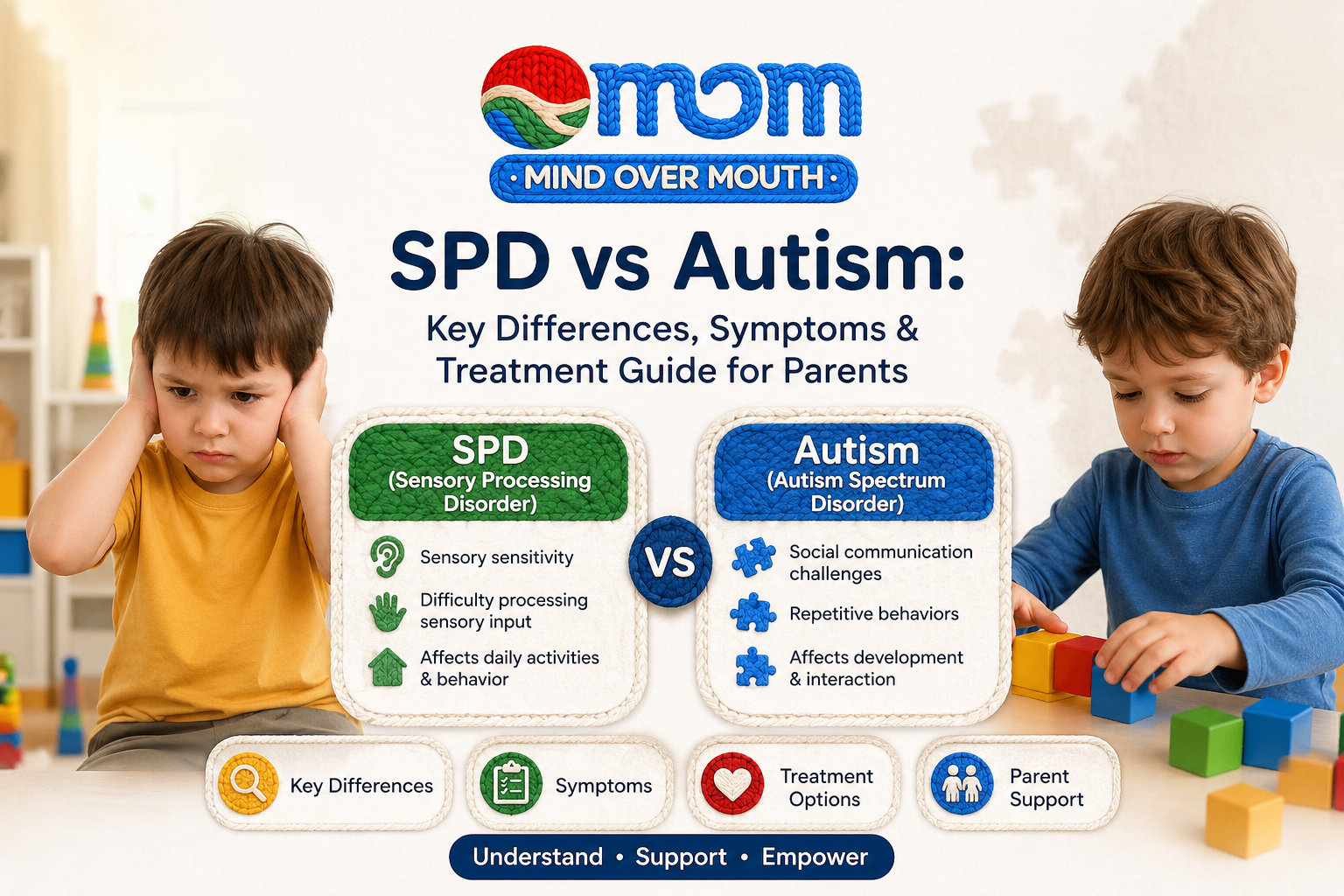
SPD vs Autism: Key Differences
Understanding SPD vs Autism differences is essential for parents.
1. Main Issue
- SPD: Sensory processing difficulty
- Autism: Social + communication challenges
2. Social Skills
- SPD: Mostly normal
- Autism: Often affected
3. Communication
- SPD: No major delay
- Autism: Speech or communication delay
4. Repetitive Behaviour
- SPD: Rare
- Autism: Common
5. Diagnosis
- SPD: Not officially listed in DSM-5
- Autism: Clinically diagnosed
👉 These differences clearly explain SPD vs Autism.
SPD vs Autism: Overlap Explained
One of the biggest confusions in SPD vs Autism is overlap.
👉 Many children with autism also have sensory issues.
For example:
- Noise sensitivity
- Avoiding touch
- Seeking movement
👉 SPD vs Autism does NOT mean they are the same condition.
👉 A child can have sensory issues without autism.
SPD vs Autism: Can a Child Have Only SPD?
Yes.
In SPD vs Autism, many children:
- Communicate normally
- Socialize well
- Only struggle with sensory input
👉 This means they may have SPD only, not autism.
Diagnosis in SPD vs Autism
Autism Diagnosis
- Developmental pediatricians
- Psychologists
- Behaviour assessments
SPD Assessment
- Done by Occupational Therapists
- Sensory and behaviour evaluation
👉 Proper assessment is important when understanding SPD vs Autism.
Treatment in SPD vs Autism
When it comes to SPD vs Autism treatment, both need different approaches.
SPD Treatment
- Occupational Therapy
- Sensory integration therapy
- Focus improvement
Autism Treatment
- Occupational Therapy
- Speech Therapy
- Behaviour Therapy
- Social training
Parent Tips for SPD vs Autism
If you’re dealing with SPD vs Autism, here’s what you can do:
- Create a calm environment
- Maintain routine
- Identify triggers
- Use calming strategies
- Encourage communication
👉 These steps help in both SPD and Autism conditions.
When to Seek Help
Consult a professional if your child:
- Has sensory issues
- Shows speech delay
- Avoids social interaction
- Repeats behaviours
Final Thoughts on SPD vs Autism
Understanding SPD vs Autism can feel confusing — but it doesn’t have to be.
- ✔️ SPD = Sensory issue
- ✔️ Autism = Social + communication condition
👉 In SPD vs Autism, a child can have:
- Only SPD
- Only Autism
- Or both
Knowing the difference helps you take the right action at the right time.