How Occupational Therapy Changed Our Family: A Real Autism Journey
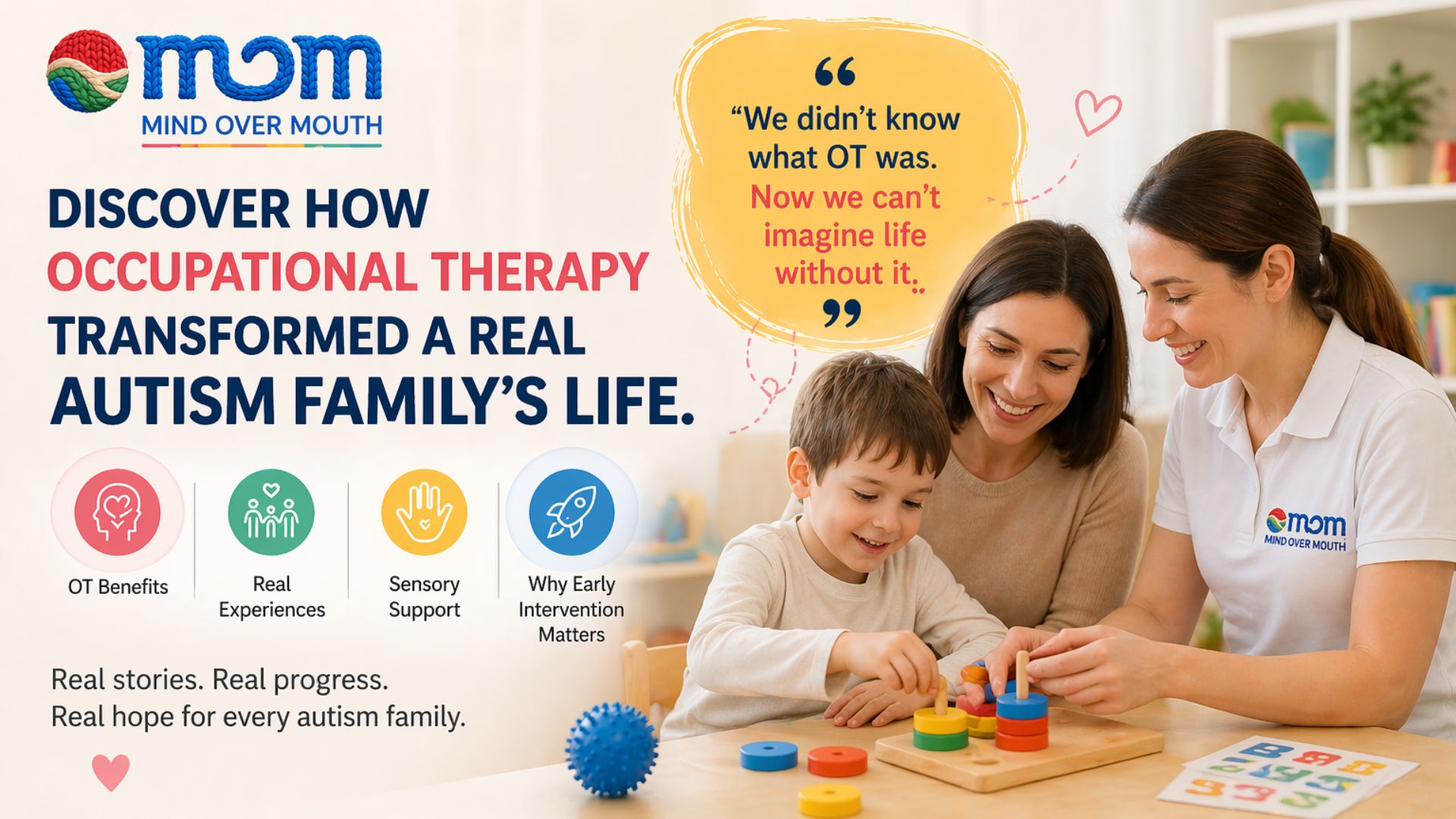
“We didn’t know what Occupational Therapy (OT) was. Now we can’t imagine life without it.”
For many families navigating an autism diagnosis, this sentence becomes deeply personal.
When a child is diagnosed with autism, parents often find themselves overwhelmed with questions:
- What should we do next?
- Which therapy is right for our child?
- Is occupational therapy really necessary?
This blog shares a real story from a real family—a journey from confusion and fear to clarity, confidence, and transformation through Occupational Therapy (OT).
The Diagnosis: Confusion, Fear, and Overwhelm
Receiving an autism diagnosis can feel like your whole world suddenly changes.
One moment, everything seems normal… and the next, you are filled with questions, worries, and uncertainty about your child’s future.
What Parents Often Feel
- Shock – “How did this happen? We didn’t expect this.”
- Anxiety – Constant worrying about what lies ahead
- Fear about the future – “Will my child be okay? Will they live a normal life?”
- Information overload – Too many opinions, advice, and medical terms at once
It can feel confusing and overwhelming because everything is new and unfamiliar.
What Doctors Usually Recommend
- Speech Therapy – to help with communication and language skills
- Occupational Therapy (OT) – to improve daily life skills, focus, and behavior
- Behavioral Therapy – to manage emotions and improve learning patterns
The Biggest Question Parents Have
Even after hearing all these recommendations, one question stays in every parent’s mind:
👉 “What exactly is Occupational Therapy, and does my child really need it?”
This question is completely natural — because when everything is new, it’s hard to understand what truly matters.
What is Occupational Therapy (OT)?
Occupational Therapy (OT) is a structured, evidence-based approach designed to help children develop the skills they need for daily life.
Key Areas OT Supports:
- Sensory processing
- Fine and gross motor skills
- Attention and focus
- Self-care skills (eating, dressing, hygiene)
- Emotional regulation
In Simple Terms: OT helps children become more independent, confident, and functional in everyday life.
The First OT Session: Expectations vs Reality
The first therapy session can be intimidating for parents.
Common Fears:
- Will my child cooperate?
- Will therapy be stressful?
- What actually happens during a session?
What Actually Happens:
- The environment is child-friendly and engaging
- Activities feel like play, not pressure
- Therapists build trust gradually
Instead of forcing outcomes, therapists focus on connection and comfort first.
The Small Wins That Changed Everything
In the beginning, progress may seem small.
- Slight improvement in eye contact
- Increased sitting tolerance
- Reduced meltdowns
These “small wins” are actually major developmental milestones.
Over time, they lead to:
- Better communication
- Improved behavior
- Increased learning ability
From Small Progress to Big Transformation
After consistent therapy (3–6 months), changes become more visible.
Before OT:
- Hyperactivity
- Poor attention span
- Sensory overload
- Limited interaction
After OT:
- Improved focus
- Better emotional control
- Increased engagement
- More independence
OT doesn’t just improve skills—it transforms the child’s overall quality of life.
The Impact on the Entire Family
Parents Experience:
- Reduced stress
- Increased confidence
- Better understanding of their child
Family Life Improves:
- More structured routines
- Fewer emotional breakdowns
- Stronger parent-child connection
Is Occupational Therapy Worth It?
✅ Short Answer: YES
Why OT is Worth It:
- Early intervention leads to better outcomes
- Personalized therapy plans
- Long-term developmental benefits
- Evidence-based results
OT is not an expense—it is an investment in your child’s future.
What Research Says
Proven Benefits:
- Sensory integration improves behavior regulation
- Motor skill development enhances academic readiness
- Structured routines improve independence
Expert Insight:
Certified occupational therapists design customized plans tailored to each child’s needs.
- Targeted development
- Measurable progress
- Sustainable results
Signs Your Child May Need Occupational Therapy
- Speech delay
- Poor eye contact
- Difficulty focusing
- Sensory sensitivity (noise, touch, light)
- Hyperactivity
- Difficulty with daily tasks
Early support can make a significant difference.
What Life Looks Like Now
For this family, life has changed in meaningful ways:
- “Our child is calmer and more responsive.”
- “We understand our child better now.”
- “Daily routines feel manageable.”
OT didn’t just help the child—it restored hope for the entire family.
A Message to Parents
- The earlier you begin, the better the outcomes
- Progress takes time, but it is real
- Every child develops at their own pace
Trust the process. Stay consistent.
Conclusion
Occupational Therapy is more than just a treatment.
It is a journey of transformation, growth, and hope.
For families navigating autism, OT can be the turning point—from uncertainty to empowerment.