
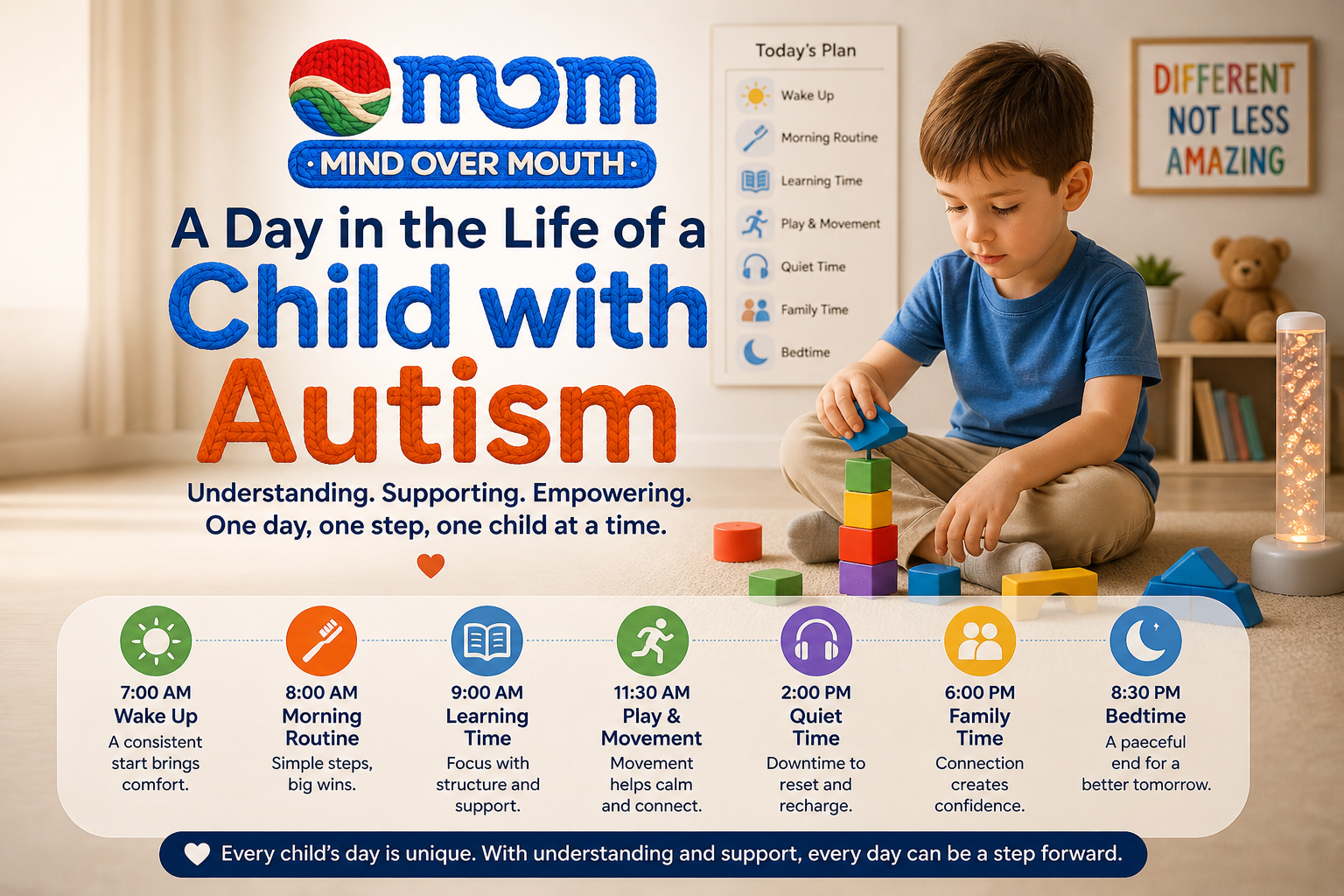
🧠 A Day in the Life of a Child with Autism 💛
Have you ever wondered what a normal day feels like through the eyes of a child with autism?
Not from a medical report.
Not from a checklist.
But from their real, everyday experience.
For many children with autism, daily life can feel overwhelming in ways we don’t always see. A simple morning routine — waking up, brushing teeth, getting dressed — can bring sensory discomfort or stress.
The sound of running water, the feel of certain fabrics, or even a small change in routine can feel intense.
At school, sitting still, focusing, or interacting with others may require extra effort. Mealtimes can be challenging due to food textures or smells. Even bedtime may feel difficult as the child processes the day’s sensory input.
- 👉 What looks “easy” to us may feel confusing or overwhelming to them
- 👉 What we see as behavior is often their way of communicating
- 👉 What they need most is understanding, patience, and the right support
Our latest blog, “A Day in the Life of a Child with Autism”, is thoughtfully written by our Occupational Therapy team to help parents truly understand these moments.
💡 In this blog, you’ll learn:
- How children with autism experience daily routines
- Why small tasks can feel big
- What triggers stress or meltdowns
- How to support your child in a more effective, compassionate way
🌅 Morning: A Challenging Start to the Day
For many children with autism, the day doesn’t start calmly — it starts with sensory input.
- The sound of an alarm may feel too loud
- The brightness of light may feel overwhelming
- Even getting out of bed can feel uncomfortable
Simple tasks like brushing teeth or getting dressed may not be “simple” at all.
- The texture of clothes may feel irritating
- The sensation of water may feel too intense
- A small change in routine may cause stress
What looks like resistance is often sensory overload or discomfort.
🎒 Getting Ready for School
Transitions are one of the biggest challenges.
Moving from home to school requires:
- Mental preparation
- Emotional adjustment
- Sensory regulation
A rushed morning or unexpected change can lead to frustration or meltdowns.
💡 Structured routines and calm preparation can make a big difference.
🏫 School Time: Hidden Effort
At school, children with autism often work much harder than it appears.
- Difficulty processing instructions
- Sensitivity to noise in the classroom
- Challenges in social interaction
- Feeling overwhelmed in group settings
They may constantly be trying to keep up and self-regulate.
🍽️ Mealtime: More Than Just Eating
For many families, mealtime becomes a daily challenge.
- Food textures
- Smells
- Temperature
- Appearance of food
This is not “picky eating” — it is often linked to sensory processing differences.
🎮 Play and Social Interaction
Playtime may look different too.
- Prefer playing alone
- Repeat the same activities
- Struggle with imagination-based play
- Difficulty interacting with peers
This doesn’t mean they don’t want connection — they may just need support to build these skills.
🌙 Evening and Bedtime: Difficulty Slowing Down
By the end of the day, a child with autism may feel mentally and physically exhausted.
- Feel overstimulated
- Struggle to relax
- Have difficulty falling asleep
Their brain may still be processing the entire day’s sensory input.
A calm, structured bedtime routine can help.
💛 Understanding Behavior Differently
- 👉 Behavior is often communication
- 👉 Meltdowns are often overwhelm
- 👉 Avoidance may be sensory discomfort
When we change how we see these moments, we change how we respond.
👨👩👧 How Parents Can Support
- Create simple, predictable routines
- Prepare your child for transitions
- Reduce sensory triggers
- Use calm communication
- Give your child time to adjust
Most importantly, be patient and understanding.
🧠 When to Seek Professional Support
- Frequently feels overwhelmed
- Struggles with daily activities
- Has regular meltdowns
- Finds it hard to focus or interact
Consulting an Occupational Therapist can help guide you with a personalized plan.
🌟 Final Thoughts
Every child experiences the world differently.
When we begin to see life through their eyes, we move from confusion to understanding — and from frustration to support.
This perspective doesn’t just change your child’s journey. It transforms your relationship with them.