
When to Seek Help: A Complete Guide to Occupational Therapy (OT) Evaluation for Your Child
As a parent, you notice everything — the small habits, the struggles, the milestones. Sometimes, there are signs that feel “a little different,” but not serious enough to act on immediately. You might wonder: Is this just a phase, or should I seek help?
This is one of the most common questions parents ask when it comes to Occupational Therapy (OT).
The truth is simple: early support can make a big difference. Many parents who delay evaluation often say later, “I wish we had started sooner.”
This guide will help you understand when to seek an OT evaluation, what to expect, and how to take the next step with confidence.
What is Occupational Therapy for Children?
Occupational Therapy helps children develop the skills they need for everyday life. This includes:
- Fine motor skills (writing, holding objects)
- Sensory processing (handling sounds, textures, movement)
- Attention and focus
- Self-care skills (eating, dressing, grooming)
- Social and play skills
An Occupational Therapist works closely with your child to improve independence and confidence in daily activities.
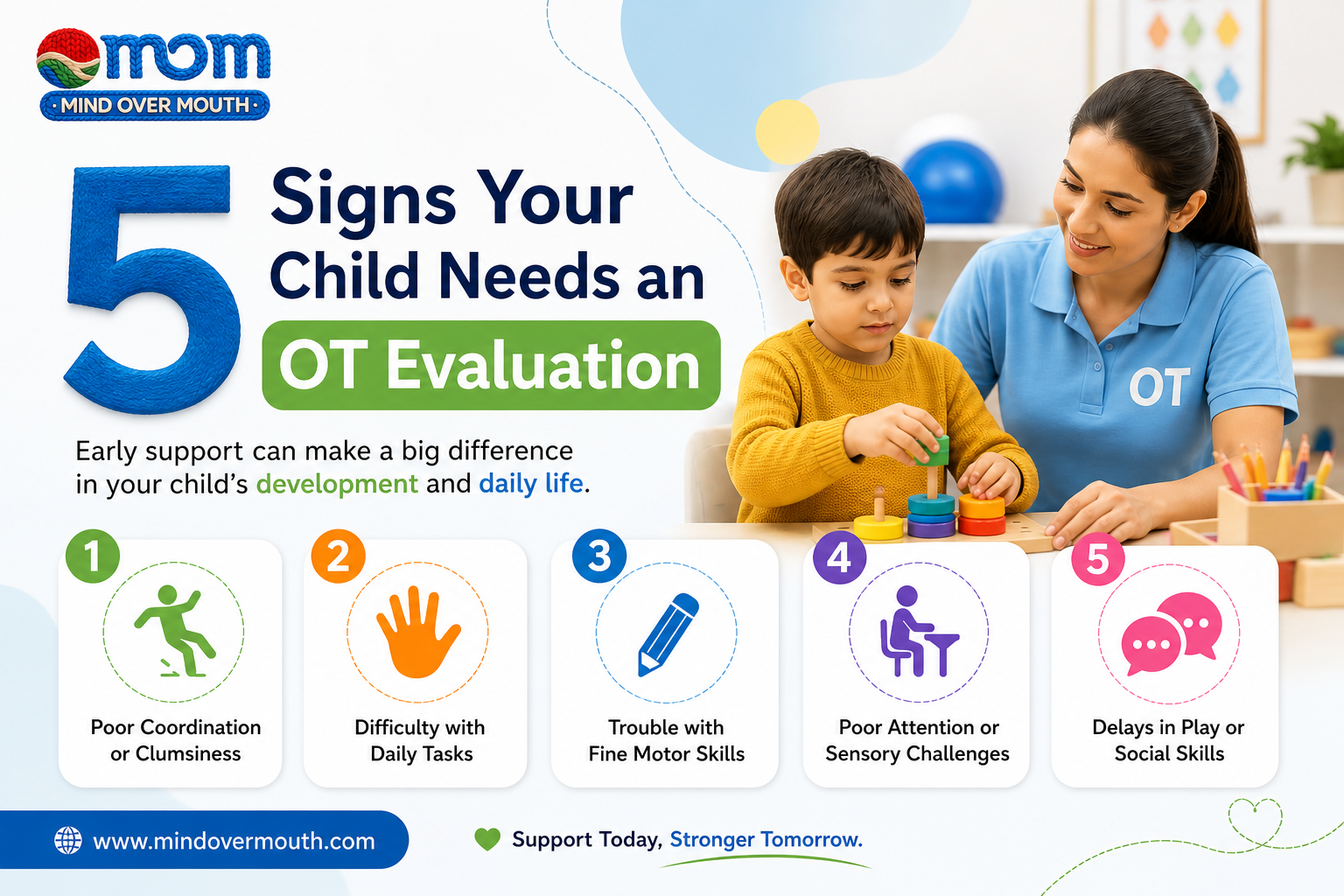
5 Signs Your Child May Need an OT Evaluation
Every child develops at their own pace, but certain signs may indicate the need for professional support.
1. Delays in Motor Skills
- Difficulty holding a pencil, crayon, or spoon
- Trouble with buttons, zippers, or tying shoes
- Poor handwriting or avoids writing tasks
2. Sensory Sensitivities
- Overreacts to loud sounds, lights, or touch
- Avoids certain textures (food, clothes, surfaces)
- Seeks excessive movement (jumping, spinning)
3. Difficulty with Focus and Attention
- Easily distracted
- Trouble sitting still for age-appropriate time
- Struggles to complete tasks
4. Challenges in Daily Activities
- Difficulty eating independently
- Trouble dressing or brushing teeth
- Avoids routine tasks
5. Social or Play Difficulties
- Prefers to play alone
- Difficulty interacting with other children
- Limited imagination in play
If you notice multiple signs consistently, it may be the right time to consider an evaluation.
What Happens During an OT Evaluation?
An OT evaluation is not something to worry about — it’s a friendly, child-centered process.
- ✔ Parent Discussion
The therapist talks with you about your child’s history, behavior, and concerns. - ✔ Observation
Your child is observed during play and simple activities. - ✔ Skill Assessment
The therapist checks:- Motor skills
- Sensory responses
- Attention and behavior
- ✔ Personalized Feedback
You receive clear insights about your child’s strengths and areas of support.
Questions to Ask Before Booking an Evaluation
- What experience do you have with children like mine?
- What does your evaluation process include?
- How long does the session take?
- Will I receive a detailed report?
- What happens after the evaluation?
These questions help you make a confident decision.
How to Prepare Your Child for the First Session
- Talk about the visit in a simple, fun way
- Avoid using words like “test” or “problem”
- Let your child know they will play and meet a friendly therapist
- Bring their favorite toy or comfort item
A calm and positive approach helps your child feel safe.
What Happens After the Evaluation?
- ✔ Clear Understanding
You’ll know exactly what your child needs support with. - ✔ Therapy Plan
A customized plan may be suggested based on your child’s needs. - ✔ Guidance for Home
Simple activities you can do at home to support progress.
Remember: therapy is a journey, not a quick fix. But early support leads to better long-term outcomes.
Why Early Intervention Matters
The earlier you take action, the easier it is to support your child’s development.
- Improve confidence
- Build independence
- Prevent future challenges
- Support school readiness
Waiting often makes challenges more complex — while early support keeps things simple and manageable.
Final Thoughts
If something feels “not quite right,” trust your instincts as a parent.
You don’t need to wait for a major problem to seek help. Even a simple evaluation can give you clarity, peace of mind, and the right direction.
Your child deserves the best start — and sometimes, that starts with one small step.