Hearing Evaluation
Understanding Your Child's Hearing for Better Communication & Development
Hearing plays an important role in how a child learns, communicates, understands speech, and connects with the world around them. Even a mild or unnoticed hearing difficulty can sometimes affect speech development, language skills, attention, learning, and everyday communication.
At Mind Over Mouth, our Hearing Evaluation services are designed to understand your child's individual hearing needs through appropriate, age-specific assessments. We focus on making the evaluation comfortable for the child while giving parents a clear understanding of the results and the next steps.
Why Is a Hearing Evaluation Important?
Children learn a great deal by listening. They hear sounds, recognize voices, understand words, and gradually develop speech and language through everyday interactions.
When hearing difficulties are present, a child may sometimes:
- Have difficulty responding when called
- Speak later than expected or have unclear speech
- Frequently ask others to repeat themselves
- Have difficulty following verbal instructions
- Prefer a higher volume on television or devices
- Find it difficult to understand speech in noisy environments
- Experience challenges with listening, learning, or communication
A hearing evaluation can help identify whether hearing may be contributing to these concerns. Early identification can help families understand the concern and take appropriate action at the right time.
Our Hearing Evaluation Services
At Mind Over Mouth, the assessment is selected according to the child's age, hearing concerns, cooperation level, and individual needs. Depending on the child, the evaluation may include the following assessments:
BERA
Brainstem Evoked Response Audiometry (BERA) is an objective hearing assessment that helps evaluate how the auditory pathway responds to sound.
It can be particularly useful when a child is unable to reliably respond to conventional hearing tests. The assessment provides important information about hearing sensitivity and the pathway carrying sound signals from the ear towards the brain.
OAE
Otoacoustic Emissions (OAE) testing helps assess the functioning of the inner ear, particularly the cochlea.
It is a quick and commonly used assessment and can be useful for screening and evaluating hearing in infants and young children.
PTA
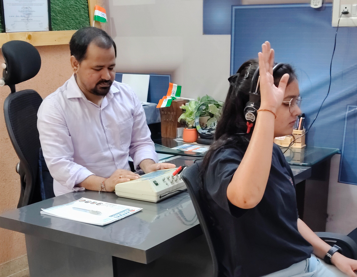
Pure Tone Audiometry (PTA) measures how softly a person can hear different sounds or tones across various frequencies.
For children who are able to participate reliably, PTA can help us understand their hearing abilities and identify the degree and type of hearing difficulty.
Impedance Audiometry
Impedance testing helps assess the condition and functioning of the middle ear.
It can provide information about concerns such as fluid in the middle ear, eardrum movement, or other middle-ear conditions that may affect hearing.
Who May Benefit From a Hearing Evaluation?
A hearing evaluation can be helpful for children who have concerns related to:
Speech & Language Development
When speech is delayed, unclear, or language development does not appear to be progressing as expected.
Listening & Understanding
When a child frequently asks for repetition or has difficulty understanding spoken instructions.
School & Learning
When listening difficulties appear to affect classroom participation, attention, or learning.
Frequent Ear Problems
Children with recurrent ear infections or concerns related to middle-ear function may benefit from a hearing assessment.
Developmental Concerns
A hearing evaluation can be an important part of understanding a child's overall communication and developmental needs.
What to Expect During a Hearing Evaluation
We understand that a new assessment can feel unfamiliar for both children and parents. Our approach is therefore child-friendly, supportive, and individualized.
1. Understanding Your Concerns
We begin by listening to what you have noticed about your child's hearing, speech, communication, learning, or everyday behaviour.
2. Choosing the Right Assessment
Not every child needs the same hearing test. Based on age and individual needs, the appropriate assessment or combination of assessments is selected.
3. Comfortable Testing
Our aim is to make the evaluation as comfortable and stress-free as possible, especially for young children.
4. Understanding the Results
Once the assessment is complete, we explain the findings to parents in a clear and easy-to-understand way.
5. Guidance for the Next Step
If further evaluation, monitoring, hearing support, or speech and language intervention is recommended, we help you understand what to do next.
Hearing and Speech Development Are Closely Connected
Hearing and communication go hand in hand. A child needs access to speech sounds in order to learn how words sound, understand language, and develop clear communication.
When hearing difficulties are present, identifying them early can help families seek the appropriate support.
At Mind Over Mouth, our audiology and speech-language expertise allows us to look at hearing and communication together rather than treating them as completely separate concerns.
Why Choose Mind Over Mouth?
At Mind Over Mouth, we believe that assessment should not simply provide a test result. It should help families understand their child's needs and make informed decisions.
- Professional hearing assessment
- Age-appropriate testing
- Child-friendly care
- Clear explanation of results
- Personalized guidance
- Support for speech and communication needs
- Family involvement throughout the process
When Should You Consider a Hearing Evaluation?
You don't always have to wait until a hearing problem becomes obvious.
If you have noticed that your child is not responding consistently to sounds, has delayed speech, struggles to understand spoken language, frequently asks for repetition, or has difficulty listening in everyday situations, a hearing evaluation may provide useful answers.
If you're unsure whether your child needs an evaluation, speaking with an audiologist can help you understand the appropriate next step.
Helping Children Hear, Communicate & Grow With Confidence
Every child's development is different. Our goal is to understand the individual child, identify concerns as early as possible, and provide families with clear information and practical guidance.
At Mind Over Mouth, we are here to help you understand your child's hearing and take the next step with confidence.
Have concerns about your child's hearing or speech development?
Talk to our team at Mind Over Mouth and schedule a hearing evaluation.
Book a Consultation